Is Automated Irrigation Worth It for Economic Crops?
For Economic Crops
BAANLARN KNOWLEDGE
Practical engineering guides covering smart-home control, water systems, IoT, sensors, Master / Node architecture and automation. Choose a topic for a structured, field-oriented explanation.
For Economic Crops
Start with Real Needs
Reduce Cost, Improve Yield
Real Data for Better Decisions
For the Actual Site
One System, Clear Status

Water & Garden
The value of automated irrigation is not simply that a pump can switch itself on. A useful system controls timing, zones, water conditions and abnormal states consistently, so operators can verify what happened rather than rely on routine manual checks.
Before selecting controllers or sensors, map the water source, pump duty, pressure, flow, pipe routes and required zones. Automation cannot compensate for a hydraulic layout that cannot deliver the required water. Zones should reflect crop type, growth stage, soil, pipe distance and pump capacity.
Soil moisture, tank level, flow, temperature and rain sensing can improve decisions, but a measurement only represents the location where it is taken. Sensors should be positioned to represent the site and the control logic should include sensible fallback behavior when a reading becomes implausible or unavailable.
An ON command to a relay does not prove that water reached the field. Useful systems can check critical conditions such as low tank level, abnormal flow, excessive runtime or an equipment state that does not match the command.
A project can begin with priority zones and expand later. What should be prepared early is spare I/O capacity, cabinet space, power, signal routes and a consistent naming structure so future work is an extension rather than a rebuild.
Smart Home Electrical System
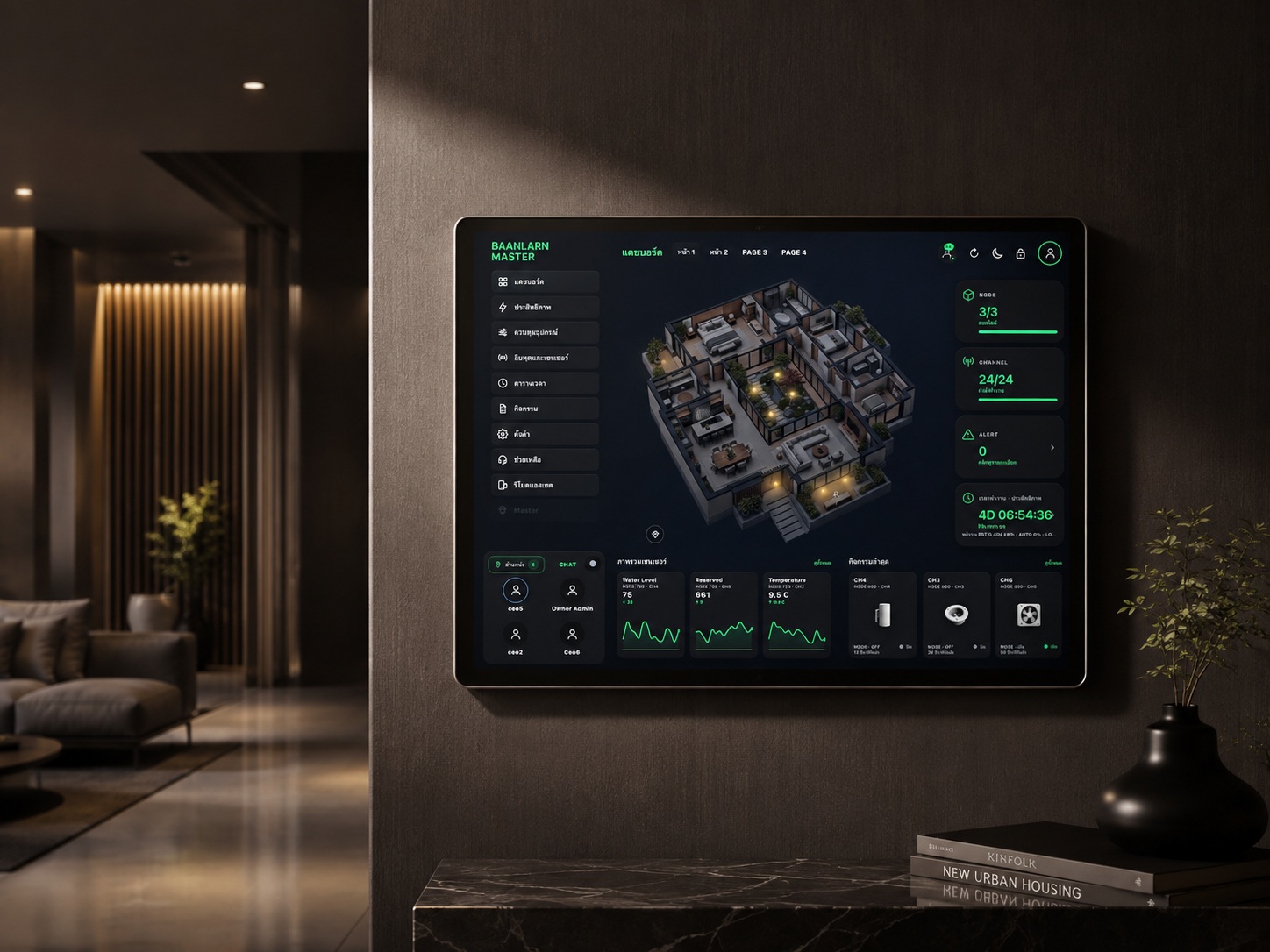
A practical smart home should not begin with buying the largest number of devices. It should begin by designing the circuits people use every day so they remain easy to control, continue to work when the internet is unavailable, and retain a clear Manual path when required.
List daily functions such as indoor lighting, garden lighting, pumps, curtains, ventilation, irrigation and equipment that follows a schedule. Decide which functions should be Manual, scheduled, or automatic from sensors. This avoids installing impressive features that solve no real problem.
Critical control loops inside the home should be able to operate on the local network. Remote access, off-site alerts and cloud services can be additional layers. This reduces the dependency of basic home functions on external services and makes everyday response more predictable.
The Master handles central visualization, configuration and logic, while Nodes sit closer to input or output functions such as sensors, relays and proportional control. Clear separation makes wiring easier to trace, isolates faults and allows capacity to grow without replacing the entire control system.
A polished interface is only one layer. The installation should also consider circuit separation, protective devices, cabinet access, labeling, maintenance space and capacity for additional Nodes or circuits.
Before handover, test Manual commands, schedules, automatic rules, offline states, abnormal conditions and recovery after power or network interruptions. Structured verification catches problems before they become day-to-day frustrations.

Economic Crops
A cost-effective system does not need every available sensor. It should reduce repetitive work, reduce avoidable mistakes and present the information that actually changes operational decisions—especially water, soil, weather and equipment state.
Repeated valve operation, unnecessary watering, forgotten pumps, tank checks and long inspection routes are strong candidates for automation. Starting with recurring work makes the benefit easier to measure than starting with technology for its own sake.
Zones should reflect crop type, growth stage, irrigation method, soil differences and pump limitations. Meaningful zoning makes schedules and automation easier to understand and maintain.
A moisture or temperature chart is useful only if operators know what decision it supports: changing irrigation duration, pausing after rainfall, investigating abnormal flow or comparing zones. Data with no operational purpose often becomes another maintenance burden.
Additional ponds, pumps, valves, sensors or greenhouses are common over time. Spare I/O and cabinet capacity let the system grow by adding modules rather than building a separate control system.
IoT & Sensors
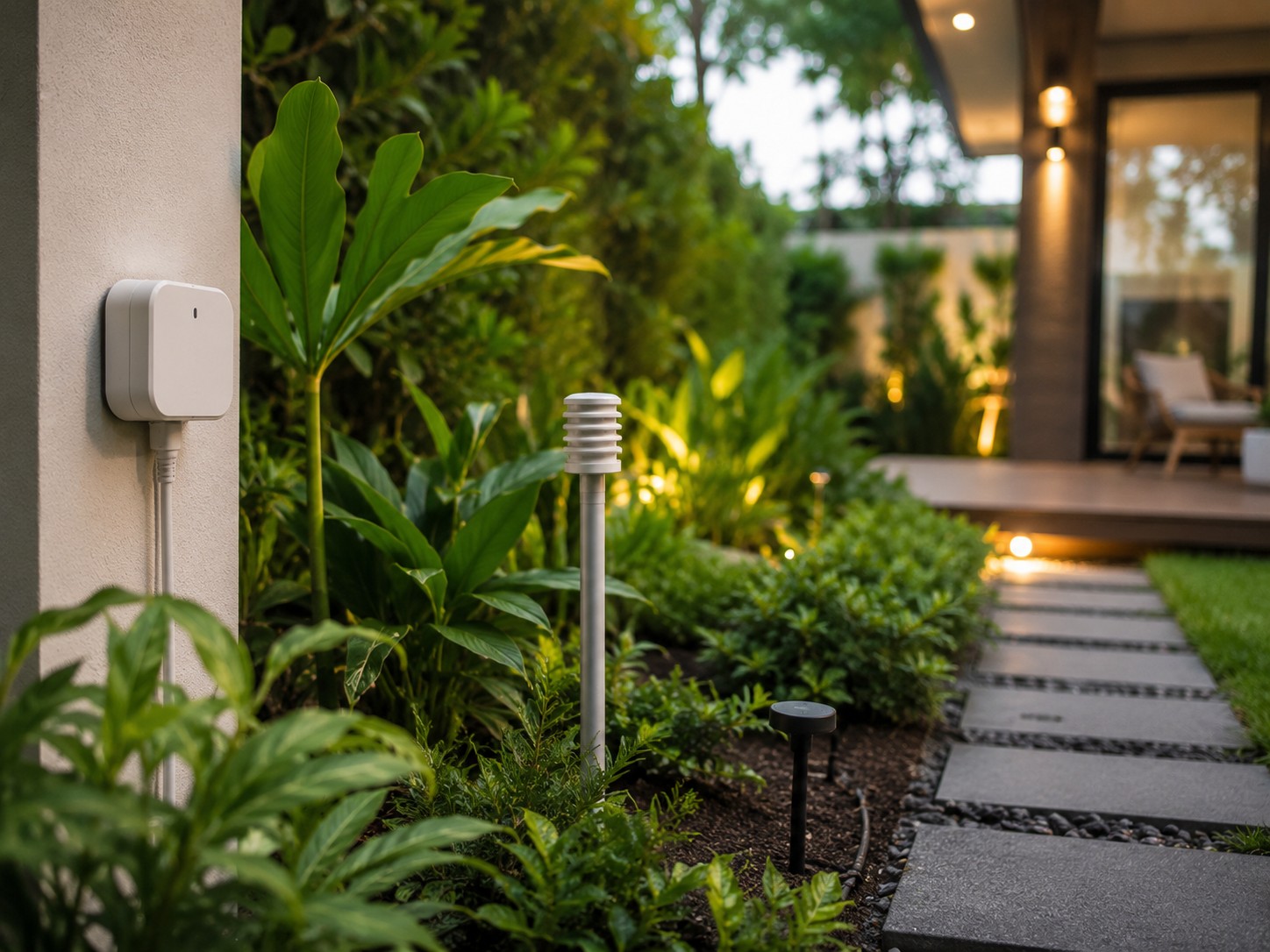
A useful sensor does more than put a number on a dashboard. It must produce dependable information in the field, and the system must know whether that value should create an alert, trigger a control action, or simply help an operator make a decision.
Soil moisture can answer whether a zone needs water. Tank level indicates whether pumping is safe. Flow can confirm whether water moved after a command. Temperature and humidity describe the environmental condition. Starting from the question prevents unnecessary instrumentation.
The same sensor can behave very differently depending on sunlight, moisture, mounting position and wiring. Outdoor work must consider durability, signal type, protection, measurement range and future service access—not only headline accuracy.
Signal type affects Node selection and wiring. Some sensors provide continuous values, while others provide state or pulse information. Matching the interface to the signal from the beginning avoids field conversions and makes troubleshooting clearer.
Important equipment should not depend on one raw value without bounds. The logic can validate ranges, require a value to persist for a period of time, or combine it with another state so a disconnected or failed sensor does not create an unsafe command.
Control System
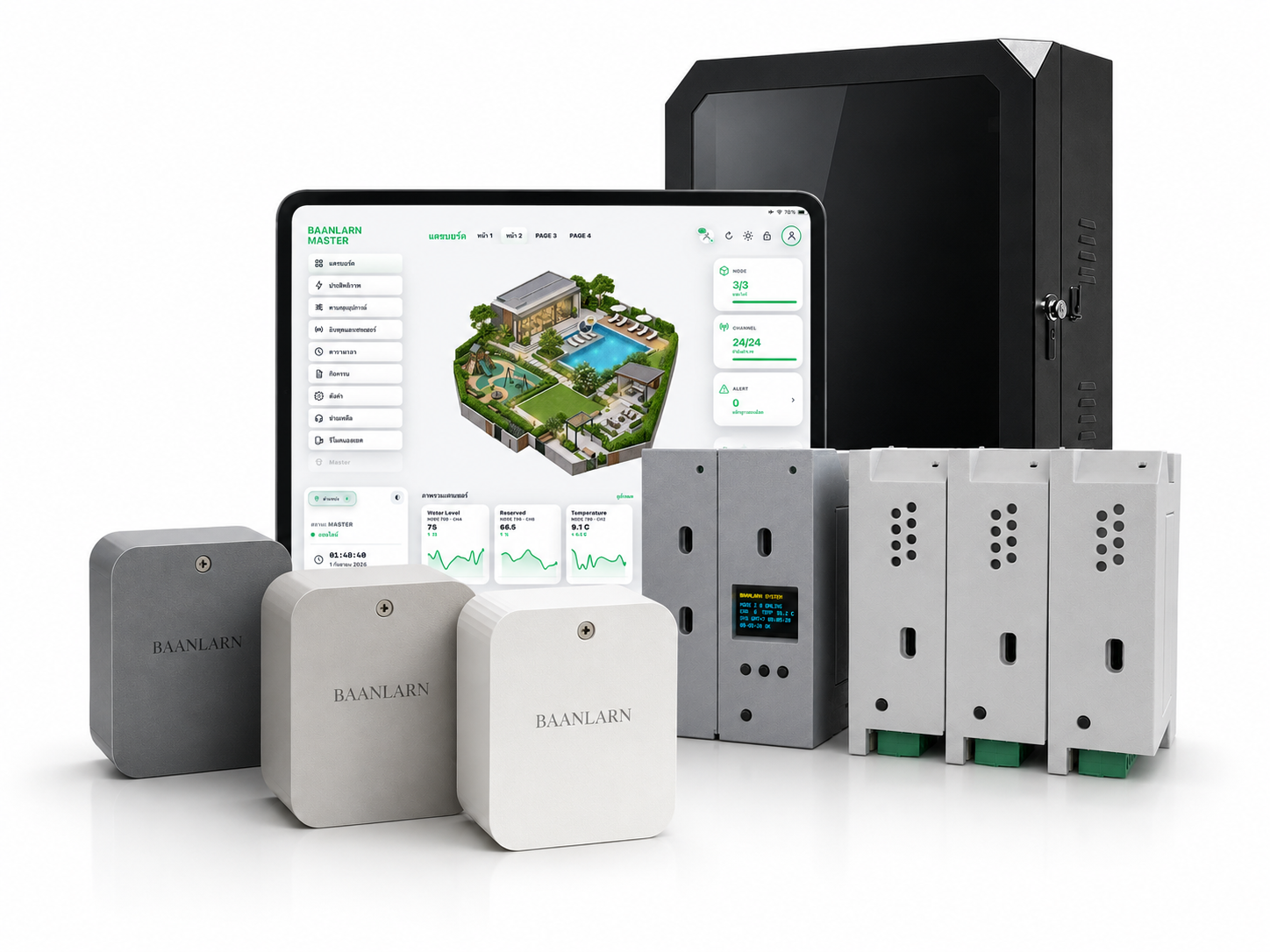
Control-system sizing should not start with “how many boxes do I need?” It should start with actual signal count, load type, site distance, zoning and maintenance needs. Those requirements can then be translated into the right Master, Nodes and cabinet arrangement.
List every point the system must know and every point it must control: switches, tank level, soil moisture, flow, pumps, valves, lighting, fans and proportional devices. Separate them into Analog Input, Digital/Pulse Input, Relay Output and Output Control. This makes Node selection purposeful instead of approximate.
Bringing every cable to one point is not always practical. Placing Nodes near groups of sensors or controlled equipment can simplify wiring and make the system easier to inspect by zone, while the Master remains the central place for logic, settings and status.
A well-designed cabinet organizes the Master, Nodes, power supplies, protection and field terminals so the system can be serviced safely and expanded. Cabinet size, ventilation, voltage separation, labeling, cable routing and installation environment all matter.
Spare channels should reflect a real expansion plan—another zone, additional sensors or future outputs. The objective is not to buy the largest system immediately, but to make sure the architecture can grow without rebuilding accepted work.
Core control should run on site for continuity. Remote access can be added when external monitoring or control is required. Separating these layers keeps local operation independent of the internet while preserving the option for controlled remote access.

Farm & Greenhouse
Centralized control does not mean every field device should depend on one physical controller. It means operators get one clear view of status and logic while field Nodes and equipment remain organized by function and zone.
Greenhouses can include pumps, valves, fans, misting, lighting and environmental sensors. Grouping devices by zone or process makes logic easier to read and helps contain the effect of a local fault.
Fixed-time tasks fit schedules. Functions that depend on temperature, humidity, water level or light fit sensor conditions. Combining both approaches avoids unnecessary logic complexity.
Examples include preventing a pump from running with low water, limiting maximum runtime, preventing incompatible outputs from running together, or defining what happens when a sensor goes offline. When information is incomplete, the system should move to a safe and understandable state.
Operators should see which Nodes are online, which Channels are active, what condition created a command and where an abnormal state exists. Clear state and useful logs reduce field inspection time.
After installation, test sensors, outputs, schedules, automatic logic, power recovery, communication loss and safety conditions individually before testing the complete process. Structured commissioning reduces startup risk.